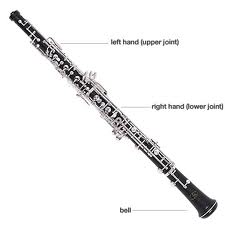
 I’ve started practicing the oboe again — as part of the long development process towards my next theatrical piece, Sea of Reeds (a commission by the Shotgun Players in Berkeley, in collaboration with my long-time producer, Jonny Reinis, and director, David Dower). And so all the sensations of oboe-playing — which I haven’t done regularly since I was a teenager — are coming back. The feel of the reed between my lips. The too-loud clacking of the keys as I press them (working on that!). The smell of cork grease in the morning.
And the awareness, at every moment, of my longing to create something that’s beautiful! It is that gap — between the sounds I am making and those I wish to produce — that, more than anything else, brings me back to those teen years, when my hope was that I was going to become great: at oboe-playing, at math, at sports, at love. But what I was really good at, in retrospect, was in not becoming anything other than this — my parents’ child. And somehow I got it in my head that being their child meant never working hard at things. If I was precocious: fine! But when that precociousness was challenged — when, in the terms of math or marathon running, I “hit the wall” — I was at a loss. To be struggling was to be uncool.
The funny thing is, as I’m writing this, I’m remembering one of the very few criticisms that my father ever addressed to me. I was a teenager; we were standing in the narrow hallway of the bustling apartment that he and my stepmother, Sue, had set up, with my young siblings underfoot everywhere; and he must have been reacting to something I’d said, or hadn’t said, that reflected a privateness — a distance, at least, from him. “You’re cool,” he said, appraising me. … I know, it doesn’t sound like much of a critique! And I don’t think he meant it in a totally negative way, either. But it was as if, after idealizing me since my birth — and projecting the most glorious future onto me — Dad was, in that moment, seeing right through to my essential self; and he was realizing, with a sigh, that his ideal and the reality had, somewhere, diverged.
Through no fault of his, or of anyone’s, I have devoted much of my time since then to trying to close that gap — to revert to the contours of the perfect vision he (and maybe Mom as well) had of me as a little boy. Kind of like standing partway out into the ocean and hoping that, if I just stay there, doing absolutely nothing, the currents will pull me back to shore. When in fact that journey has already, irrevocably, begun — when, in fact, it has mostly happened. So that the real question is, What will I do as I head to the other side?
It’s shocking that progress is not inevitable! Neither in our individual selves nor in society. As a child I believed it was inevitable, with all my heart; I was a fundamentalist of progress — I had no doubt. So how to reconcile that ideology with my experience of practicing the oboe and not becoming great? A conundrum! This, I think now, is where faith comes in. But I also think I need to adjust my concept of faith — or perhaps that adjustment has already begun. Because I used to think that faith required — was pointed at — a perfect result: a utopia. Now I don’t consider perfection a goal — or even a possibility, or even (God help me) desirable (because it suggests the death of change). Now I consider the goal to be: better. Just better. A better world. A better transition from C to C-sharp (lots of fingers have to be slapped down at once, as quietly as possible). Or maybe it’s more accurate to say that the object of my faith is now a process — one that keeps open the space for improvement.
Also, the oboe being what it is, I have a short-term goal of being able to practice for more than 20 minutes at a time! (The old embouchure ain’t what it used to be, which itself wasn’t what it should have been.)
I’ve been doing scales, sometimes with a metronome. Also, etudes from the massive Barret Oboe Method book that has weighed down the music stand of every oboist I know. And — with a vague idea that the music of J.S. Bach will play a featured role in Sea of Reeds — I’ve been dipping into a book I have containing many of Bach’s lovely cantatas for oboe and voice. That book is called Difficult Passages — a title that’s bracing in its blunt honesty. It leaves unmentioned the fact that those passages, if played well, are also beautiful. … Actually, they’re beautiful even if not played well (as just happened when I practiced a few of them). Because, somehow, in these compositions the ideal is always immanent. Which I now feel I am finally beginning to understand as, facing back at where I began, I blow myself, in tiny increments, towards the other shore.
[ADDED ON 1-28-21:]
I come out of semi blog retirement to announce that a wonderful person named Kathy Sheinhouse, having read Jeff Greenwald’s article about my attempts to make oboe reeds, has sent me two beautiful reeds of her own making!
Her company is (appropriately) called Magic Reed. Her website is here — and if you are one of the multitudes who, like me, have a helluva time trying to make even one workable reed, you can email her at Info@MagicReed.com. She claims to actually enjoy making reeds — miraculous (and, um, magical)!!
Beautiful blog post, Bro’!